Ikkat Sarees: What They Are, Pochampally Ikkat and How to Buy Genuine Handwoven
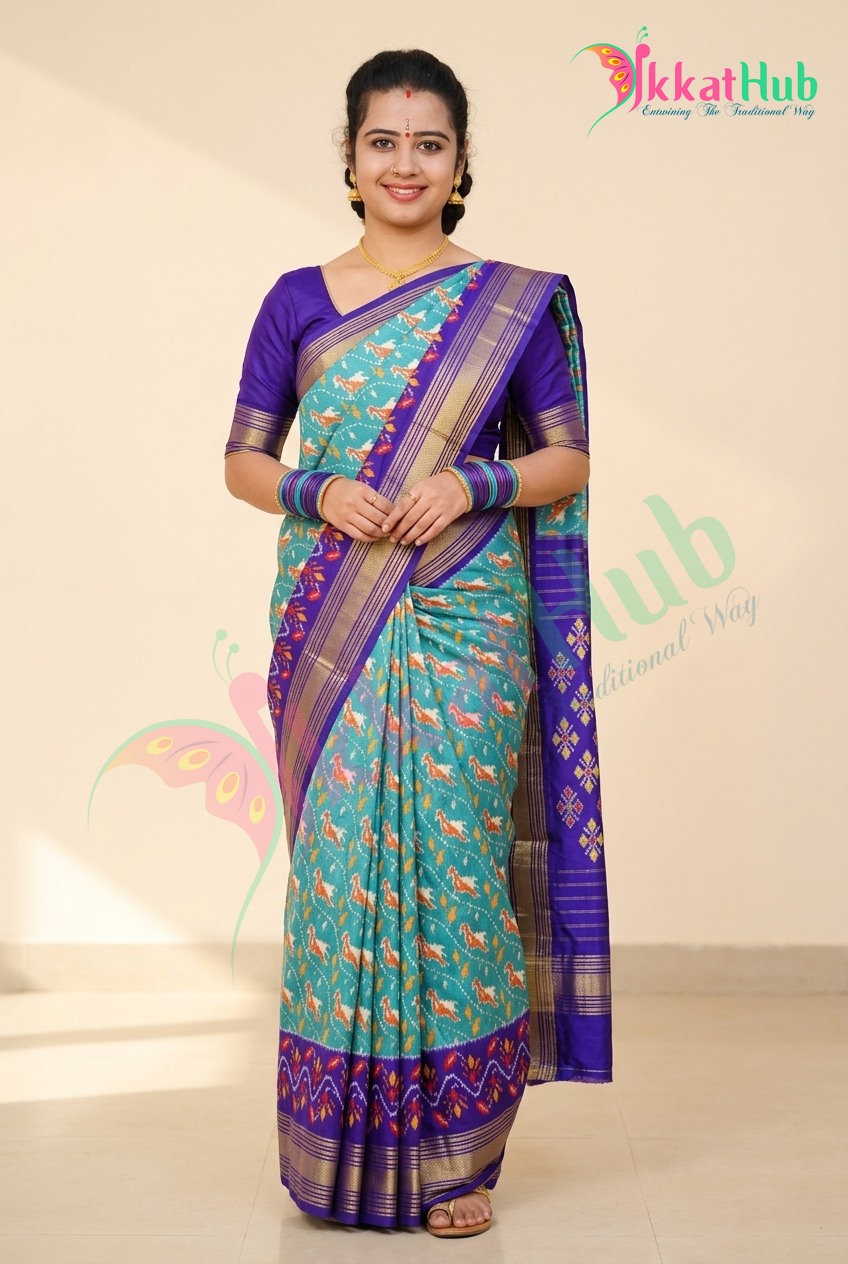
Ikkat sarees are some of the most loved handloom sarees in India. Their bold patterns with soft, feathered edges are not printed on the cloth – they are dyed into the yarn before weaving. This guide explains how ikkat is made, what makes Pochampally ikkat special and how to spot a genuine handwoven saree.
What is an ikkat (ikat) saree?
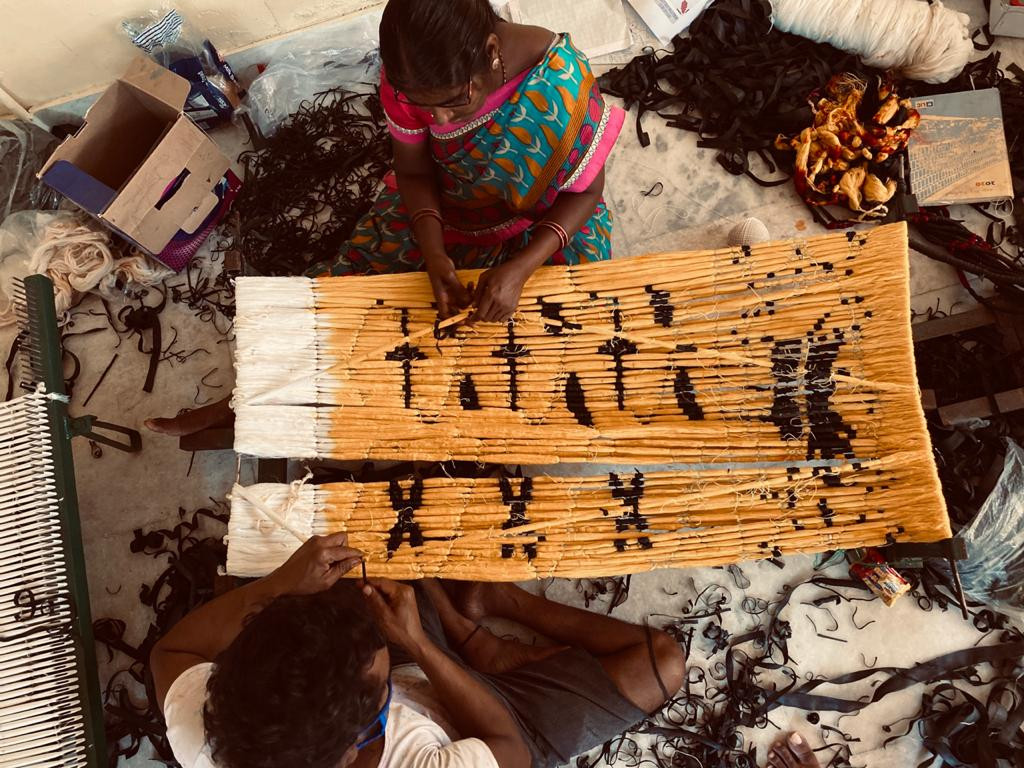
Ikkat is a way of making patterns by tie-dyeing the yarn before weaving. Small sections of yarn are tied tightly so the dye cannot reach them. After dyeing, the ties are opened and the yarn shows the pattern in two or more colours. When it is woven, the pattern appears in the cloth.
Ikkat and ikat are the same thing. “Ikkat” is the usual spelling in Telangana and Andhra Pradesh, and “ikat” is the spelling used around the world. The word comes from the Malay word mengikat, which means “to tie”. In Telugu, a pure silk ikkat saree is often called a Pochampally pattu saree.
How ikkat is made
Most of the work is done before the weaving starts:
- Design: the pattern is marked on the stretched yarn.
- Tying: the marked parts are tied tightly, so they resist the dye.
- Dyeing: the yarn is dyed; for more colours it is re-tied and dyed again.
- Opening: the yarn is dried, the ties are removed and the yarn is wound in order.
- Weaving: the weaver lines up the pattern thread by thread on a handloom.
There are two main kinds. In single ikkat, only one set of threads is tie-dyed – either the warp (the long threads) or the weft (the threads that go across). In double ikkat, both the warp and the weft are tie-dyed, and the weaver must match both patterns exactly while weaving. Double ikkat takes much longer to plan and weave, so it is rare. You can read the full process step by step in our article how Pochampally ikkat is made.
Pochampally ikkat
Pochampally, also called Bhoodan Pochampally, is a town in Yadadri Bhuvanagiri district, Telangana, about 45 km from Hyderabad. The name “Bhoodan” comes from the Bhoodan (land gift) movement that Vinoba Bhave started here in 1951. The town and nearby villages are home to many weaving families.
Pochampally ikkat is known for bold geometric patterns – diamonds, checks, zigzags and lines – and for bright colour combinations. Pochampally Ikat has a GI tag (Geographical Indication), which recognises it as a traditional product of this region. To learn more about the town and its weavers, see our page on the Pochampally handloom village.
Ikkat vs printed “ikat-look” sarees: how to spot handwoven
Many printed sarees copy the ikkat look. Here is how to tell a real one:
- Both sides look the same. The colour is in the yarn, so the pattern is just as clear on the back. A printed saree is usually lighter on the back.
- Slightly blurred edges. The dye spreads a little along the tied yarn, giving soft, feathered edges. Prints have sharp edges.
- Small irregularities. Every thread is tied and lined up by hand, so no two motifs are exactly the same.
- Look at a thread. In ikkat, one thread changes colour along its length; in a print, the colour sits on top.
When you buy online, ask for a photo of the reverse side and where the saree was woven.
Pure silk ikkat and Silk Mark
Pure silk yarn gives an ikkat saree its soft shine and rich fall. Silk Mark is a label from the Silk Mark Organisation of India, set up by the Central Silk Board under the Ministry of Textiles. A Silk Mark label tells you that the saree is made of pure natural silk. Our pure silk ikkat sarees carry the Silk Mark.
How to care for a silk ikkat saree
- Dry clean only. Do not machine wash or soak it.
- Iron on low heat with a thin cotton cloth in between.
- Store it in a cotton cloth, not in plastic, so the silk can breathe.
- Avoid direct sun and damp places. Refold it every few months so the folds do not become permanent.
How to buy from IkkatHub
IkkatHub (Ikkat Hub Pvt Ltd) is based in Pochampally and has sold handwoven Pochampally ikkat sarees since 2017. We buy every saree directly from weaver families, and each saree is a single piece. Every saree has a code, such as IH-0012, so you can ask about it easily.
- Free delivery all over India in 3–7 working days.
- Questions? WhatsApp or call +91 95810 25988 with the saree code.
See all our Pochampally ikkat pure silk sarees. A few to start with:
- Turquoise and Violet Ikkat Zari Checks Pure Silk Saree (IH-0012)
- Rani Pink Ikkat Kanchi Border Pure Silk Saree (IH-0002)
- Sky Blue and Red Ikkat Kanchi Border Pure Silk Saree (IH-0005)
- Black and Cream Ikkat Zari Checks Pure Silk Saree (IH-0023)
Frequently asked questions
What is an ikkat saree?
An ikkat saree is a handwoven saree whose pattern is made by tying and dyeing the yarn before weaving, so the design is part of the cloth and not printed on it.
Are ikat and ikkat the same?
Yes. Ikkat is the usual spelling in Telangana and Andhra Pradesh; ikat is the spelling used around the world. Both mean the same tie-and-dye weaving technique.
Where is Pochampally ikkat made?
In Pochampally (Bhoodan Pochampally) and nearby villages in Yadadri Bhuvanagiri district, Telangana, about 45 km from Hyderabad. Pochampally Ikat has a GI tag.
How can I identify a handwoven ikkat saree?
The pattern is equally clear on both sides, the edges of the motifs are slightly blurred, and there are small irregularities between motifs. Prints are lighter on the back.
How should I wash a silk ikkat saree?
Dry clean it. Do not machine wash or soak it. Iron on low heat with a cotton cloth in between, and store it folded in a cotton cloth, away from direct sun.
Recent Posts
Ikkat Sarees: What They Are, Pochampally Ikkat and How to Buy Genuine Handwoven